Showing posts with label Glacier National Park. Show all posts

Wednesday, April 10, 2013

Trip to Glacier National Park - Part 5 (GoingToTheSun Road)


The best experience in the trip was driving “Going To The Sun road”. This road was completed in 1932 and goes over the continental divide at Logan pass. The road, 53 miles long, is a National Historic landmark and Historic Civil Engineering landmark.

The road is one of the most difficult roads in North America to snowplow in the spring. Up to 80 feet (24 m) of snow can lie on top of Logan Pass, and more just east of the pass where the deepest snowfield has long been referred to as Big Drift. The road takes about ten weeks to plow, even with equipment that can move 4000 tons of snow in an hour. The snowplow crew can clear as little as 500 feet (150 m) of the road per day. On the east side of the continental divide, there are few guardrails due to heavy snows and the resultant late winter avalanches that have repeatedly destroyed every protective barrier ever constructed. The road is generally open from early June to mid October, with its latest ever opening on 13 July (in 2011).

Lake McDonald is approximately 10 miles (16 km) long, and over a mile (1.6 km) wide and 472 feet (130 m) deep with a surface area of 6,823 acres (27.6 km²).


 Views from both sides of the road


Thursday, September 13, 2012

Trip to Glacier National Park - Part 4 (Lake McDonald lodge and around)

Lake McDonald lodge is located next to Lake McDonald in Glacier national park. Some pictures from around that area.
The Lake McDonald Lodge, built in 1895, is a historic lodge located within Glacier National Park, on the southeast shore of Lake McDonald. The lodge is a 3-1/2-story structure built in a Swiss chalet style based on Kirtland Cutter's design. The foundation and first floor walls are built of stone, with a wood-frame superstructure. The lobby is a large, open space that extends to the third story. It has a massive fireplace and a concrete floor scored in a flagstone pattern, with messages in several Indian languages inscribed into it. The rustic lodge is a National Historic Landmark. (Info from http://en.wikipedia.org/wiki/Lake_McDonald_Lodge).


The lodge
 Bear grass flower
One of our friends had promised to take us in their Canoe. They lost everything in the “Waldo Canyon Fire”. We were talking about them when we saw a family canoeing in the lake. When we met the family later, we told our friend’s story. To our surprise, they were also from Colorado Springs and had lost their rental property in the same fire. It became a bigger surprise, when my daughter pointed out that, their daughter and mine kindergarten classmates. What a small world we live in! Next day we had a blast when they allowed us to borrow their canoe.
The Red tour buses

Monday, September 10, 2012

Trip to Glacier National Park - Part 3 (West Glacier & Waterton Lake)

Finally we reached West Glacier, Glacier National Park, MT. We camped in our popup for the next five days. The campground was next to McDonald Lake. What a beautiful place. First day we checked with the Canadian visitor center (West Glacier) to plan our trip to Waterton National Park across the border.  To take our 14 pound dog with us, we had to have his vaccination records which we didn’t take. The daycare also couldn’t take him. Our Vet, faxed the records to visitor center within an hour. We are thankful to the vet and people in the visitor center for all their help. 
West Glacier
My family
Canadian visitor center in West Glacier
“Waterton Lakes National Park” is a national park located in the southwest corner of Alberta, Canada, and borders Glacier National Park in Montana, USA. Waterton was Canada's fourth national park, formed in 1895 and named after Waterton Lake, in turn after the Victorian naturalist and conservationist Charles Waterton. The park contains 195 sq mi (505 sq.km ) of rugged mountains and wilderness. In 1932, Waterton-Glacier International Peace Park was formed from Waterton and Glacier. It was dedicated to world peace by Sir Charles Arthur Mander on behalf of Rotary International. Although the park has a lot of diversity for its size, the main highlight is the Waterton lakes—the deepest in the Canadian Rockies—overlooked by the historic Prince of Wales Hotel National Historic Site (Info taken from http://en.wikipedia.org/wiki/Waterton_Lakes_National_Park).
Driving to Waterton National Park
Canadian border
Boat ramp, Waterton Lake
My kids, Nidhi & Ratna
Prince Wales Hotel
 Boat ride to US side
US-Canada Border
Goat Haunt - US side
 View from Prince Wales hotel
Wildlife in town
Cameron Lake
 

Thursday, August 16, 2012

Trip to Glacier National Park - Part 2 (Lewis & Clark Cavern State Park, MT)

On the second day of our trip to Glacier NP, we camped at Lewis and Clark Cavern State Park, White Hall, MT. We had a long drive that day and were lucky to setup our camper just before the thunderstorm.

 
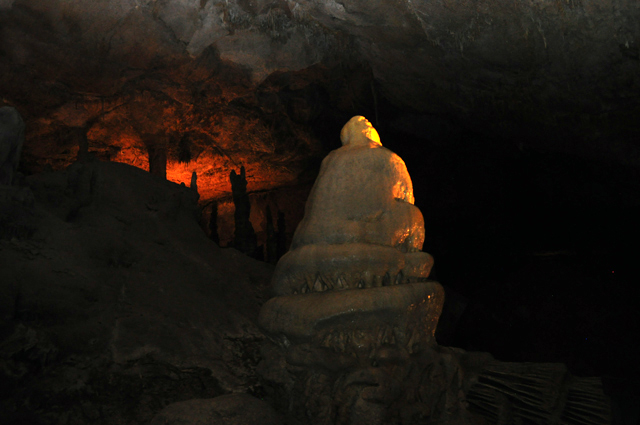
Next day morning we visited the Caverns near the campground. It was a nice hike and saw a lot of formations - stalactites, stalagmites, columns, and helictites. Most places it was dark where no flash photography was allowed, in some places, they had pure white light shining on them to display the actual colors.
Hike to the cavern entrance from visitor center
Old entrance to the caverns
Lamp used by the visitors inside the caverns in olden days
Formations